Embarking on The Guide’s Journey: A Path to Personal Transformation
As an author, my mission has always been to bring light to the struggles that many of us face and to encourage readers to take ownership of their own transformation. In my latest book, The Guide’s Journey, I invite readers to join me on a deeply personal and uplifting exploration of self-discovery, growth, and peace.
At its core, The Guide’s Journey is a story about navigating the challenges of life. It’s about understanding that no matter how far off course we may feel, there’s always a way back to ourselves. Through the lens of humor, heart, and rich cultural connections, I delve into what it truly means to be a guide—both to others and to ourselves.
A Story of Struggle and Strength
The protagonist’s journey is one that mirrors the universal human experience: facing difficulties, overcoming obstacles, and seeking a deeper sense of purpose. Along the way, readers will find themselves connecting with familiar themes: the value of family, the quest for inner peace, and the growth that emerges from moments of adversity.
One of the most powerful aspects of this book is its ability to bring together readers from all walks of life. The messages of hope, resilience, and personal growth are accessible to anyone who has ever faced hardship or felt lost. In the pages of The Guide’s Journey, the struggles we endure become the foundation for the transformation that awaits.
Embracing the Power of Humor
While the book deals with deep topics, it is also infused with humor—an important tool for navigating life’s most challenging moments. Humor allows us to face our fears with grace and to see the lighter side of even the darkest situations. It is a constant reminder that no matter how serious the struggle, there is always room for joy, laughter, and connection.
As I wrote this book, I wanted to create a balance of emotional depth and light-heartedness that would resonate with readers of all ages. The characters in The Guide’s Journey don’t just reflect their struggles; they rise above them with optimism, pushing forward with resilience and finding joy in the little things along the way.
A Cultural and Spiritual Exploration
In The Guide’s Journey, I also weave in cultural elements that offer insight into the diverse ways that different people approach growth and self-discovery. By incorporating different perspectives, the book not only broadens the scope of its themes but also celebrates the richness of the human experience.
The spiritual undertones in the story provide a sense of hope that resonates with readers who are looking for a deeper understanding of their own paths in life. These reflections on spiritual growth invite readers to explore their own relationships with inner peace, mindfulness, and purpose.
The Ultimate Message: You Are the Guide
Ultimately, the journey is about realizing that you are the guide. You have the power within you to transform your life, overcome challenges, and find peace. As the story unfolds, it becomes clear that the answers you seek are not always outside of you—they lie within.
I hope that The Guide’s Journey serves as a reminder that every step forward, no matter how small, is an important one. The path may not always be easy, but with the right mindset and the support of those around you, anything is possible.
Thank you for joining me on this journey. I invite you to dive into The Guide’s Journey, and let its message of hope, strength, and transformation guide you toward your own personal evolution.
Exploring the Majestic Taj Mahal: A Comprehensive Guide
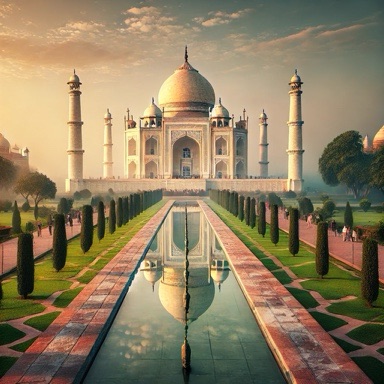
The Taj Mahal, an iconic symbol of India’s rich history and architectural brilliance, stands as a testament to love and artistic excellence. Located in Agra, Uttar Pradesh, this white marble mausoleum attracts millions of visitors annually, eager to witness its grandeur and learn about its storied past.
Historical Significance
Commissioned by Mughal Emperor Shah Jahan in 1631, the Taj Mahal was built in memory of his beloved wife, Mumtaz Mahal, who died during childbirth. Construction spanned approximately 16 years, culminating in a masterpiece that seamlessly blends Persian, Islamic, and Indian architectural styles. The complex features a central dome, flanked by symmetrical gardens, a reflecting pool, and a mosque, all meticulously designed to embody the concept of paradise.
Visiting the Taj Mahal
Best Time to Visit
To fully appreciate the Taj Mahal’s beauty, consider visiting during the cooler months. Late autumn (October to November) and early spring (February to March) offer pleasant weather and manageable crowds. Early morning visits provide a serene experience, with fewer tourists and the added allure of the monument bathed in the soft glow of sunrise.
Ticket Information
As of 2025, international visitors can purchase tickets online or at the site. The standard entry fee is 1,100 INR, with an additional charge of 200 INR for access to the mausoleum’s interior. It’s advisable to buy tickets in advance to avoid long queues.
Entry Gates
The Taj Mahal has three main entry points:
• East Gate: Less crowded, making it ideal for a more tranquil experience.
• West Gate: The most popular entry, often bustling with tourists.
• South Gate: Primarily used by locals and those visiting the nearby Mehtab Bagh for sunset views.
Opting for the East or South Gates can provide a more peaceful visit.
Guided Tours
Engaging a knowledgeable guide can enrich your visit by providing historical context and insights into the intricate details of the monument. Guides are available at the entrance or can be booked through reputable tour operators.
Nearby Attractions
While in Agra, consider exploring other notable sites:
• Agra Fort: A UNESCO World Heritage site, this red sandstone fort was the main residence of the Mughal emperors until 1638.
• Mehtab Bagh: Located across the Yamuna River, this garden offers a unique view of the Taj Mahal, especially during sunset.
• Itimad-ud-Daulah’s Tomb: Often referred to as the “Baby Taj,” this mausoleum is considered a precursor to the Taj Mahal.
Travel Tips
• Dress Code: Modest attire is recommended. Shoes are not permitted inside the mausoleum; complimentary shoe covers are provided.
• Photography: While photography is allowed in most areas, the use of tripods and selfie sticks is prohibited.
• Security: Expect thorough security checks. Avoid carrying prohibited items such as food, cigarettes, and large bags.
Conclusion
A visit to the Taj Mahal is more than just a sightseeing excursion; it’s an immersion into a rich tapestry of history, art, and culture. By planning your trip thoughtfully and respecting the monument’s sanctity, you can ensure a memorable and enriching experience.
 Holistic Haven